
On Linearity
Or, how do you make your jigsaw?

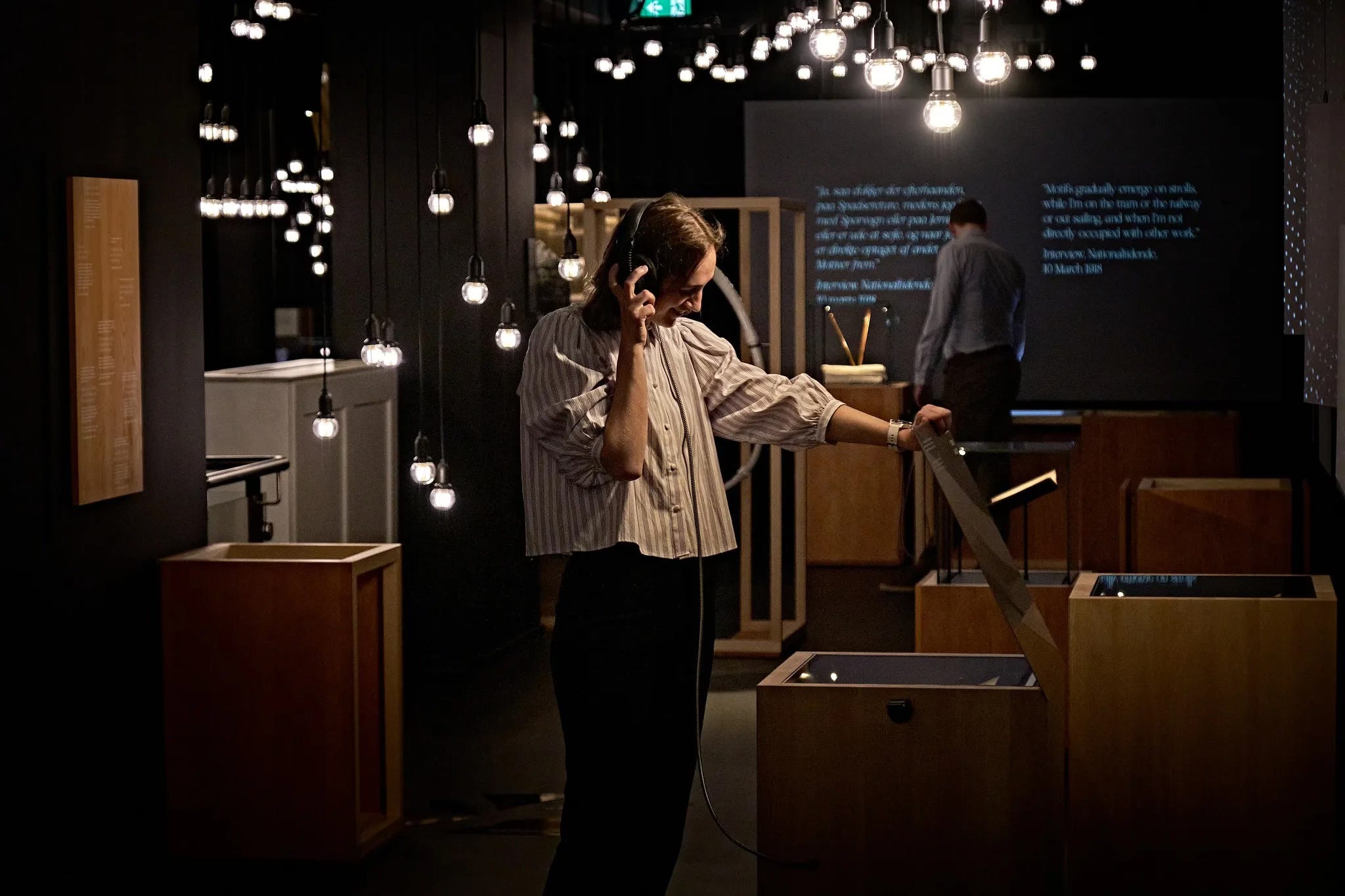
When I started working in museum making it was fashionable to be sniffy about chronological exhibitions. They felt very dated and constraining, by contrast with the potential of the thematic exhibition. And don’t get me started on timelines … so passé.
I’m older and, I like to think, wiser now. I can tell you with much more authority why chronological exhibitions can still be problematic—your collection won’t necessarily support it, it shoehorns certain events into a sequential order, it’s not necessarily the best use of space, it can imply causality when none exists. But I can also acknowledge why people value chronological exhibitions (and why exhibition visitors linger in front of a timeline).
The chronological vs thematic debate is not the same as, but linked to the linear vs non-linear debate. Again, there was a turn away from the idea of linearity in favour of the free-choice, multi-directional, multi-potential experience. Back in 2013, Nina Simon was writing about the ‘fixed march’ of the linear exhibition and wondering why there weren’t more alternatives. But as David Francis has pointed out in his research, a lot of visitors find a linear exhibition easier to navigate and less fraught with the potential for ‘doing it wrong’. (An interesting aspect of Francis’ research is the idea of cultural capital and how it informs our preferences: if you’re unfamiliar or relatively unfamiliar with exhibitions or with a particular exhibition’s content, you’ll benefit from more scaffolding; if you’re very comfortable within the museum environment and used to decoding exhibitions, you’ll likely be more open to different forms of storytelling).
Going back to chronology, people like it for the same reason: because it’s familiar. From an early age, we start to learn how chronology works and how to use it to order things that happen: this, then this, then this. Chronology serves as a handrail to guide us through narratives. Of course, it’s not the only potential handrail (nor is a fixed, linear route) but it is good to remember that if you choose to organise an exhibition in a different way, then you need to consider how you help people to navigate.
One of the things I’m exploring in my PhD research is the concept of fragmented narratives, since a lot of exhibition narratives are fragmented or modular. The classic analogy for this is the Choose Your Own Adventure book, where your choices inform the overall experience. But what I’ve learned is that fragmented narratives work best for more visitors when there is some kind of framing and support that people can use to navigate the content.
As we worked on a jigsaw puzzle over the Christmas holidays, my sister blew my mind by telling me casually that she never looks at the picture when she’s doing a jigsaw—I tried it and it was … definitely a different experience, for example by making me much more aware of colour and shape of individual pieces rather than trying to work out their content. Not better or worse, but different. That said, I also like having the picture when I’m sifting through the pieces of the puzzle. I like understanding what the bits are doing, the relationship of the parts to the whole.
The Carl Nielsen museum has a fragmented narrative (the main gallery content is organised around key pieces of music he composed; there is a VERY loose chronological arrangement that you can follow) but we deliberately created an introduction that puts this in context and provides a framework to help make sense of it. So I suppose you could say we show you the picture in the introductory gallery and then leave you to create your own puzzle from the pieces in the main gallery.
As with so many aspects of storytelling in museums, what I’ve learnt and am relearning is that there are no absolute good / bad approaches. Linearity can work, so can non-linearity. Chronology can work, so can thematic. So often what differentiates the effective approach is the intentionality and care. It’s fitting the mode to the content, rather than the other way around. It’s understanding the pitfalls of a chronological approach: for me, the biggest challenge is that it feels predictable and gives the impression that events are neatly ordered. But there are ways of injecting surprise, of breaking up the order, just as there are ways of framing or structuring a non-linear narrative so people have a guide to navigate from.