
Hidden Gems
Or doing one thing well

I’ve been thinking about hidden gems. Specifically: is it a good or a bad thing for a museum to be labelled a hidden gem? Let’s discuss.
Because I do enjoy anatomising aspects of museum practice, I’ve made a list of what I think of as defining features of a hidden gem museum.
1. Hidden gems are small
Look, it’s hard to hide if you’re the size of the British Museum (or the Met, or the Louvre; you get it). Although when I think of it, even the mega-museums can include hidden gem galleries or displays within them.
2. Hidden gems are idiosyncratic
Sir John Soane’s Museum is possibly the patron saint of hidden gem museums. One person’s vision, one person’s collection, whimsy (the monk’s parlour) and imagination galore. It’s not so much that they don’t make ‘em like this any more, so much as they never made them like this, ever. This museum defies categorisation. It’s not a type, it’s purely its own thing.
3. Hidden gems are niche
Again, I don’t think you can be a hidden gem if you’re an encyclopaedic museum or even an issue-orientated museum that’s intended to speak out to the widest possible audience. Hidden gems tend to be more about looking inward, about the personal, the collection assembled for the love of it, the house built for a particular life, the relic of a way of life long gone.
4. Hidden gems are rare
This is the gem part of the hidden gem. There has to be something special about them, something precious. This might be about exquisite craftsmanship or value or specificity or beauty.
5. Hidden gems are … exclusive
And therein may lie a problem. Thanks to social media, there’s a whole bunch of places that once truly would have been hidden and known only to a few, but now are on must-see lists, curated by people offering glimpses of the ‘real’ city. So where before being a hidden gem might have been a concern on account of, you know, the ‘hidden’ part, now there’s a cachet about it, the buzz of being in on the secret, a sense of being a person of taste. Now I’m all for recognising that we like different things, not all museums have to be for everyone and one person’s yuk can be another person’s yum. But if you’re a museum falling into the ‘hidden gem’ category (even if it’s not through anything you’ve done) is there also a risk that some people will feel excluded?
It’s a tricky square to circle. In a recent conversation about where the sweet spot might be between hidden gem and mainstream museum, one of the participants offered that the goal was not to be a hidden gem, but to think of the qualities that made their museum special and to think about the framing or the welcome that needed to be in place to help people over the threshold.
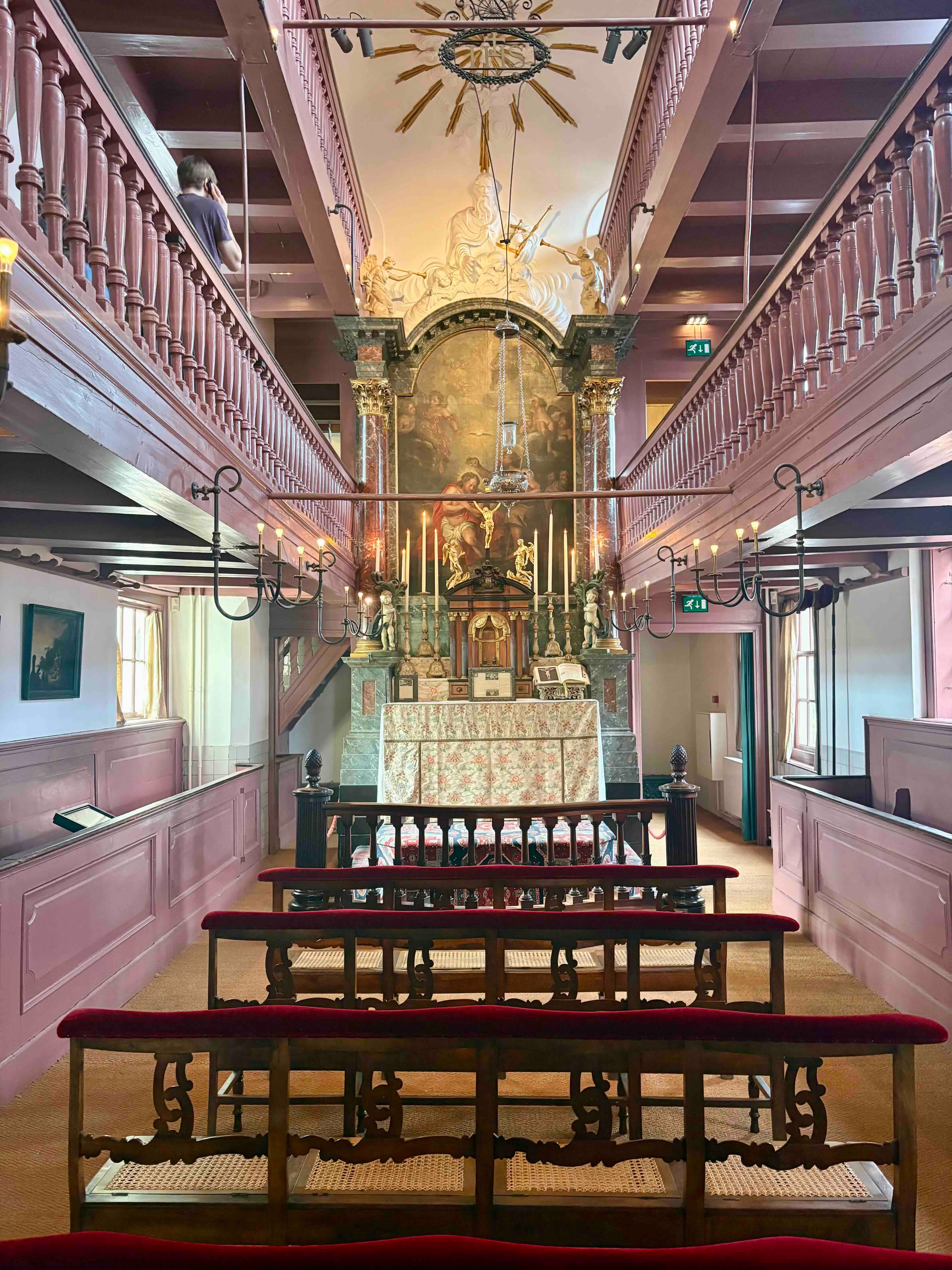
Which takes me to a recent visit to Our Lord in the Attic Museum in Amsterdam. From the website: Hidden in the heart of the city centre of Amsterdam is a small wonder: Our Lord in the Attic Museum.
Not only is the museum tucked away at the edge of the Red Light District, it’s a museum about something hidden: ‘Our Lord in the Attic’ refers to the Catholic chapel that was inserted into the attic of the house at a time when Catholicism was forbidden to be practised in public, but tolerated if it was out of sight.
The house visit is framed by a contemporary museum entrance with shop, café, introductory film—and very welcoming staff. The rest of the visit is self-guided via audio tour. The ‘wonder’ comes from the reveal: you wind your way through a series of small historic spaces and narrow staircases and emerge to see the beautifully decorated church … like a pearl in an oyster shell, the quintessential hidden gem.
It’s a special space to be in, truly one-of-a-kind. And maybe that’s the best lesson to take from the ‘hidden gem’ typology. When thoughtfully presented, it’s an object lesson in doing one thing really well—owning that and sharing that but not trying to be something you’re not.