
Lessons from Ditchling
Or, are we paying attention to the right things?

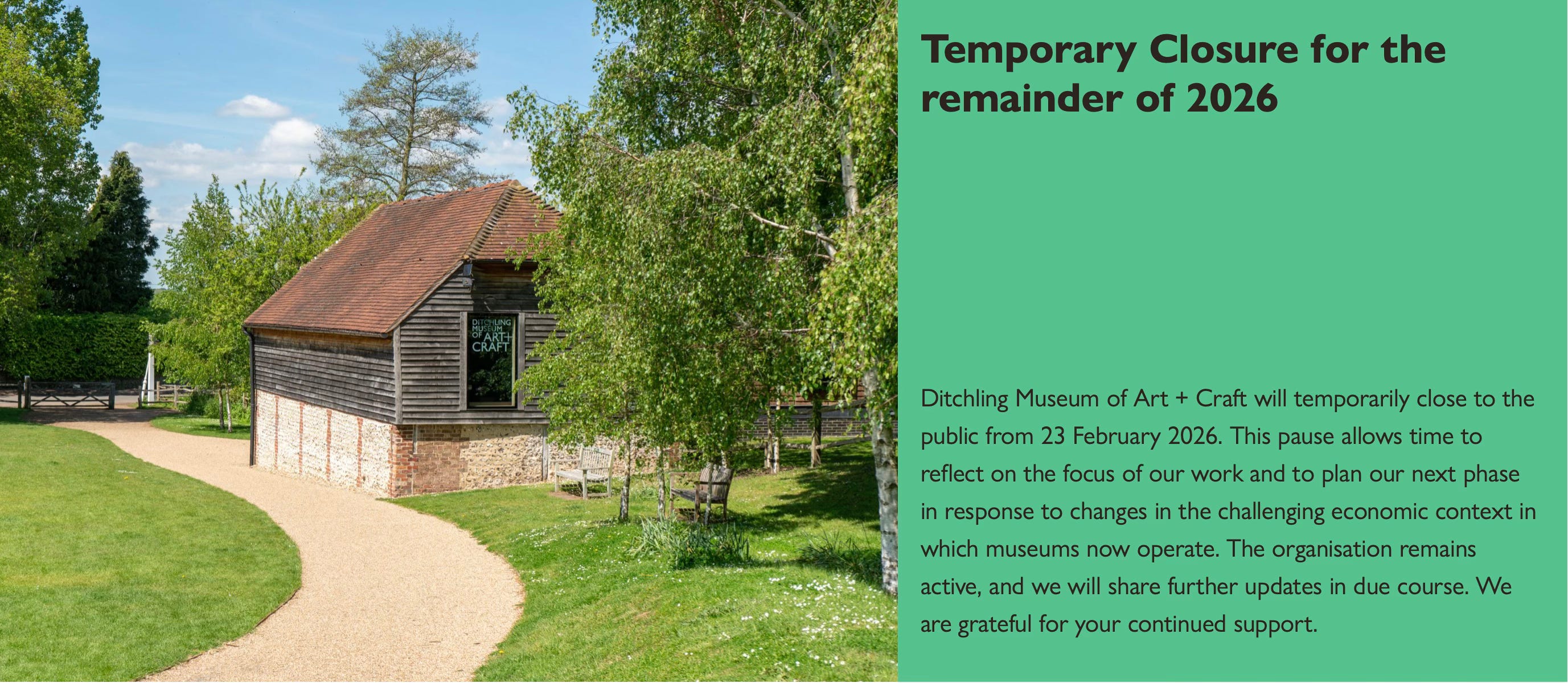
I shouldn’t have been so surprised, but I was caught off guard when I saw that Ditchling Museum, which had been closed for a few months, has now made all of the staff redundant. The ‘temporary closure’ announced in February looks set to be a more permanent one. This is sad on multiple levels. Horrible for the people who worked at the museum. Concerning for the wider sector, with so many museums struggling to keep the lights on (literally and metaphorically). Sad for me personally, because Ditchling occupied a place in my heart reserved for small, local museums that do things really well. (See also: hidden gems)
An apricot slice. Chewy and crumbly, sweet and tart, glowing orange in the sunshine. Not to get too Proustian, but when I close my eyes this is one of the first things I remember from my visit to Ditchling, over a decade ago. Other things I remember: the walk to the museum from the train station, through a perfect slice of English countryside. The beautiful architecture that fits perfectly in the village surrounds. The thoughtful Wunderkammer approach to display. The excellence of the café and shop. The insightful and illuminating temporary exhibitions.
For those who don’t know it, the museum’s collection centres on arts and craft, particularly the work of The Guild of St Joseph and St Dominic, a 20th century reinvention of a medieval guild. Probably the best known member was Eric Gill, famous for his work in design, particularly in type design (he created the Gill Sans typeface). After Gill’s death, it emerged that he was a serial sexual abuser.
I don’t know how much the Gill connection has affected the museum’s visitor numbers. Maybe his story was always a worm in the apple, but I truly believe that the quality of the museum’s work—including how they’ve explicitly addressed the troublesome parts of Gill’s story rather than ignoring it to focus on his professional output—demonstrated their ongoing value.
I’ve written before on the transformational impact that growing up or living near an excellent museum could have. And to me, Ditchling seemed to be a shining example of a museum that is rooted in its locality (that could not work in this form anywhere else) but with an ambition to deliver a world class experience and a commitment to excellent design that makes sense given its collection, but is still not a given for most smaller, non-national museums.
If you’ve worked with me, you may have heard me lamenting a tendency in our sector to try to fix everything with architecture (or design). To be clear, the right building, the right renovation, the right design approach can be transformational. They facilitate the work of a museum, create spaces that really work for people, frame narratives and create vessels for emotion. And trying to deliver great exhibitions and programming (or, you know, the 1001 other tasks that museum teams are trying to accomplish) in spaces not fit for purpose is a Herculean challenge.
For example, I was captivated by a recent visit to the CAM in Lisbon which was redeveloped in 2024 by Kengo Kuma. It is a beautiful space to spend time in, with art, with friends. It felt embracing but expansive. It had one of the most appealing education / workshop spaces I’ve seen for a long time. I had a sense of a museum that knew who it was and why it existed. It’s not only defined by its difference from the 1960s Gulbenkian Museum across the park, it’s also offering a different, though complementary, contemporary art experience to audiences. The redevelopment has reframed the experience, increased accessibility and made the building work harder for audiences and staff alike.
But somewhere along the way it seems like there’s been some confusion between the importance of having museum buildings that really work and thinking that museum problems can be solved by building—new, more and bigger. The solution to your challenges, whether that’s declining income, or tired displays, or a lack of connection with audiences might be a new wing (it really might be a new roof), but it might also be about changing the way you’re working, or rethinking your audience strategy, or reconsidering your approach to storytelling. And at the very least, you should look at all of those things before you start down the ‘architecture will save us’ route, because by really understanding who you are, you’ll write better briefs and get better results.
This is not a critique of big museums. I live in London, one of the world’s great museum cities. I regularly visit the big national museums, and value them enormously for their scale and scope. But our world would be so much poorer without the small museums, the local museums, the museums that give us a sense of connection with our immediate community. In his modest manifesto for museums, Orhan Pamuk argues that we need small museums, “we need modest museums that honor the neighborhoods and streets and the homes and shops nearby, and turn them into elements of their exhibitions.”
When I read the news about Ditchling, I thought—but they did everything right. This may be simplistic, maybe there are things that needed to change. But what my gut was saying was—this was a great visitor experience. A properly excellent end-to-end journey. A museum that did so many things well. A museum you would love to have in your neighbourhood. And it still isn’t enough.
Museums in the UK are chronically underfunded. I can’t fix that, none of this Substack community can. It requires system change and a proper commitment from government to funding museums, libraries and other precious civic spaces. But at a time when it’s hard for smaller museums to get attention—let alone money—we can bang the drum, speak up for them, support them, celebrate them, become members, buy from their gift shops, eat their apricot slices in enormous quantities. Do everything we can to preserve their incredible richness. Because we will miss them, immeasurably, when they’re gone.
Food for Thought
This LinkedIn post about the decline in funding for civic spaces is worth your time
Sometimes the Met Gala seems to epitomise what’s wrong with our sector, but this piece about how the money raised is supporting the long-term financial sustainability of the Costume Institute and the Met overall made me reconsider (a bit)